Monthly Archives: January 2010


Gelitin

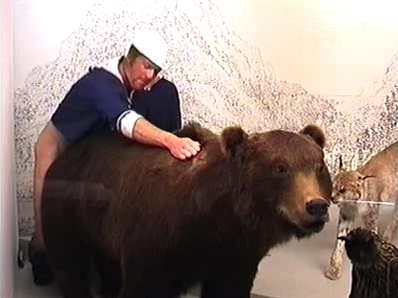
gelitin_tierfick

Gelitin, still from ‘Tierfick’  (1998)

Stephen Lichty

bears_02
‘Two Bears’ by Stephen Lichty.


Barry & Stuart’s ‘rabbit from a hat’ trick

Barry and Stuart’s ‘rabbit from a hat’ trick.


Hannah Whitaker

Below images are photographs by Hannah Whitaker. Via

hannah witaker-rabbit

Read More »


‘Dog call’ by Halstead

Barbra (Halstead) makes phone calls trying to locate a specific breed of a putty-colored dog, but can only describe it by its bark. (1993)


Cindy Sherman


‘Doll clothes’ (1975) by Cindy Sherman. One of Cindy Sherman’s first super-8 films.


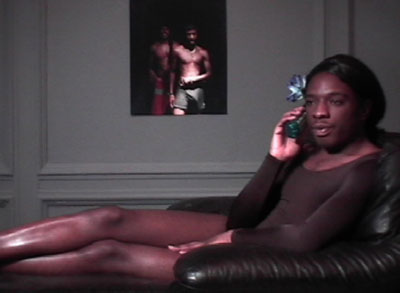
Kalup Linzy

linzy

Kalup Linzy (born July 23, 1977) is an American video and performance artist who lives and works in Brooklyn, New York. Born in Clermont, Florida, Linzy graduated from the MFA program at the University of South Florida in 2003. He also attended the Skowhegan School of Painting and Sculpture video art workshop, and in 2005 received a grant from the Louis Comfort Tiffany Foundation. Linzy was named a Guggenheim Fellow in 2007. Linzy’s best known work is a series of video art pieces satirizing the tone and narrative approach of television soap opera. Linzy performs most of the characters himself, many of them in drag. He also performs many of the same characters on stage.

Kalup Linzy, excerpt from ‘Keys to our heart’ (2008)

Interview here
Read More »


Hype Williams ft. Paradise Sisters

Part of the Hype Williams Project is this video for ‘Kisha’s Barbeque’ by Paradise Sisters (1999)

Enjoy!


Kendell Geers

KendellGeers93-TW(Blow)-1 KendellGeers93-TW(Blow)-2

KendellGeers93-TW(Blow)-3 KendellGeers93-TW(Blow)-6

KendellGeers93-TW(Blow)-8 KendellGeers93-TW(Blow)-9

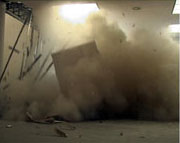
‘The devil never rests aka BLOW’ (1999) by Kendell Geers. Watch video.

Some more nice video’s:

Read More »


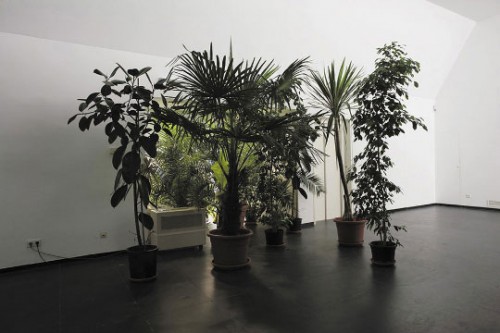
Mandla Reuter, ‘Coppice’

mandlareuter-coppice 2007

Mandla Reuter, ‘Coppice’ (2002)

An intervention that caused people to have to find a different way into the room.

Jeppe Hein, ‘360 presence’

jeppehein-360presence2002

Jeppe Hein, ‘360 presence’ (2002)

Interview with Jeppe Hein here.


Mike Nelson, ‘To the memory of H.P. Lovecraft’

mike nelson_hp lovecraft 99

Mike Nelson, ‘To the memory of H.P. Lovecraft’ (1999)

Guardian article on the work.

mike nelson_hp lovecraft 99-3

Interview after the jump:

Read More »


Anish Kapoor


‘Shooting into the corner’ (2009) by Anish Kapoor

Installation at the Royal Academy of Arts in London (2009). A canon shoots 11 kilograms heavy wax balls into the corner of the next room.

Read More »


Ujin Lee

ujin lee - dust

Ujin Lee, from the ongoing series ‘Dust’ (2009)


Vincent Ganivet

manda219122181 (1)‘Mandala’ by Vincent Ganivet. Made out of dust and remains.

More photo’s:

Read More »


Ivan Puig

ivanpuig-mandala

Ivan Puig, ‘Mandala’ (2006)

Just one more work after ‘le jump’.

Read More »


Michael Gumhold

Movement #1913–2007

Michael Gumhold, ‘Movement #1913–2007′

via


Frank Zappa plays the bicycle


Frank Zappa plays the bicycle. His TV debut on the Steve Allen show (1963).

See the entire clip here: 

Read More »


Ariel Schlesinger

Ariel Schlesinger, Bubble Machine, 2006

Ariel Schlesinger, ‘Bubble Machine’, 2006

Read More »


Michael Kontopoulis

‘Machines that Almost Fall Over’ (2008) by Michael Kontopoulos.

A system of sculptures that is constantly on the brink of collapse.


Washing Machine

washer[1]

Washing machine made from a water dispenser by N55.


Johannes Vogl

Afbeelding 13

Johannes Vogl, Ohne Titel (Marmeladenbrotstreichmaschine) / Untitled (Machine to produce jam breads) (2007)

Read More »


Merkel & Baldessari

merkel

baldessari


Daniel Bejar

Keys_Vinny_web

Daniel Bejar, ‘The visual topography of a generation gap’ (2006 – now)

A copy was made from Bejar’s original apartment key, then a copy was made from that copy. This process was repeated until the original keys information was destroyed, resulting in the topography of a generation.


Driessens & Verstappen

During the etching process five keys are submerged in an etching solution. From time to time one of the objects is removed from the solution, until finally a small unrecognisable shape was left over.

sleutel5

sleutel6

sleutel7

sleutel8

sleutel9

sleutel10

sleutel5

sleutel4

sleutel3

sleutel2

sleutel1

During the galvanisation process, metal atoms from a copper sulphate solution are deposited onto the objects by means of electrolysis. Just like during the etching process, four keys have been subject to the chemical process for an increasing period of time.

Driessens & Verstappen, ‘Morphoteque #13′ (2003)


Locks of love

9085120

Locks of love at the Ponte Milvio in Rome, Italy.

Locks of love are the padlocks fixed by loving couples to symbolize their eternal love. A couple would hang a padlock after inscribing their name or initials on it and throw the key away so that their love is locked forever.

Read More »


Don Justo’s Self Built Cathedral

Cathedral_of_Justo_Gallego

Do it yourself:  Justo Gallego Martínez is building his very own Cathedral in Mejorada del Campo near Madrid, Spain.

This is no “model” cathedral and he is neither a qualified architect, nor engineer, nor bricklayer — he is a farmer. “The plans have only ever existed in my head” and have evolved over time in response to opportunity and inspiration.

Read More »


Ferdinand Cheval’s ideal castle

facteur cheval ensemble

Ferdinand ‘Postman’ Cheval’s ‘ideal castle’.

Cheval began the building in April 1879. He claimed that he had tripped on a stone and was inspired by its shape. He returned to the same spot the next day and started collecting stones.

For the next 33 years, during his daily mail route, Cheval carried stones from his delivery rounds and at home used them to build his Palais idéal, the Ideal Palace. First he carried the stones in his pockets, then a basket and eventually a wheelbarrow. He often worked at night, by the light of an oil lamp.

Cheval spent the first two decades building the outer walls. The Palace is a mix of different styles with inspirations from the Bible to Hindu mythology. Cheval bound the stones together with lime, mortar and cement.

More after the jump.

Read More »