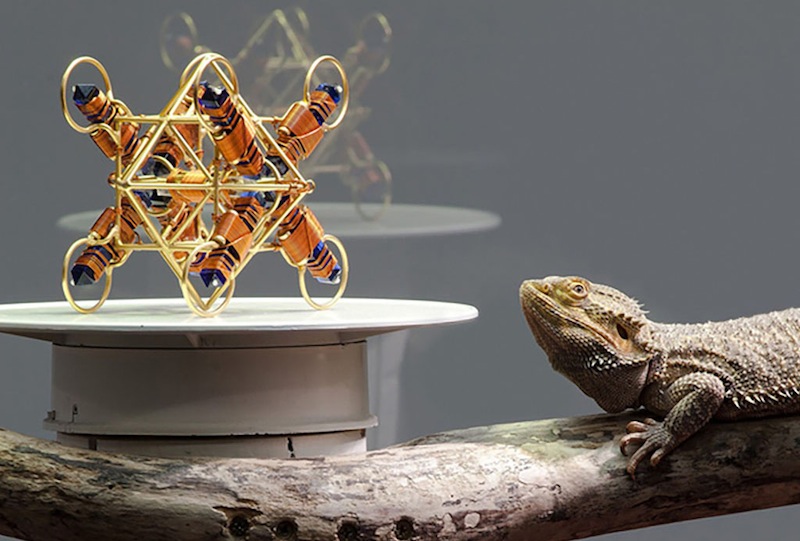
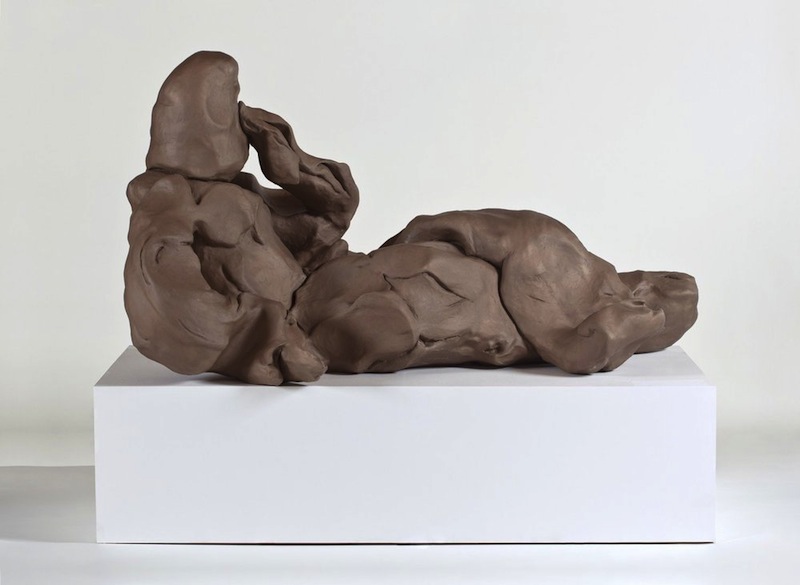
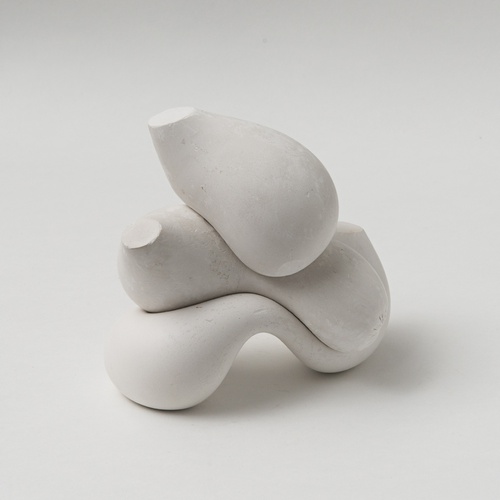
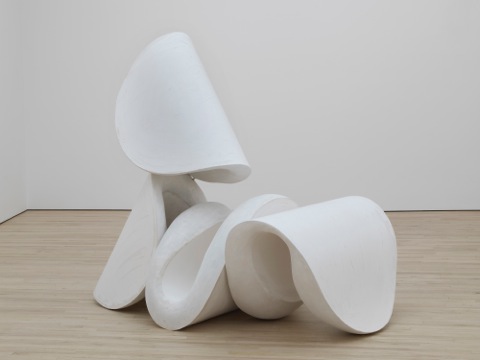
Totem of objects that Vo’s grandmother, Nguyen Thi Ty, received from The Immigrant Relief Program and The Catholic Church upon arriving in Denmark as a refugee: – 1 Phillips 26 inch TV – 1 Gorenje washing machine – 1 Bomann refrigerator – 1 wooden crucifix – 1 personalized entrance card for a casino
‘Relocated houses, Brittons yard’ (2009) by Lara Almarcegui.
On the outskirts of the city of Wellington (NZ) there is a weird collection of houses. The houses are moved there from different places and on display, waiting to be sold (housemoving is a common occurance in New Zealand). The result is a ghost-town like street with empty buildings, some in state of disrepair.
Lara Almarcegui traced the roots of each building in this street. For the One Day Sculpture project she created a tour and a catalogue showing the individual stories and memories connected to each house. By inviting people to visit the yard with her one evening, Almarcegui coaxes us to look not simply at what these buildings are but why and how they are here, and in turn to speculate on the processes of change in our environment.
Martin Boyle produces work that is both playful and performative. He re-presents mass produced quirky objects and packaging in multiple forms to the viewer through video installation and sculptural pieces. His work highlights a preoccupation with ideas of value, or lack off, through his use of packaging and consumer goods…
Daniel Bejar, ‘The visual topography of a generation gap’ (2006 – now)
A copy was made from Bejar’s original apartment key, then a copy was made from that copy. This process was repeated until the original keys information was destroyed, resulting in the topography of a generation.
During the etching process five keys are submerged in an etching solution. From time to time one of the objects is removed from the solution, until finally a small unrecognisable shape was left over.
During the galvanisation process, metal atoms from a copper sulphate solution are deposited onto the objects by means of electrolysis. Just like during the etching process, four keys have been subject to the chemical process for an increasing period of time.
Cheval began the building in April 1879. He claimed that he had tripped on a stone and was inspired by its shape. He returned to the same spot the next day and started collecting stones.
For the next 33 years, during his daily mail route, Cheval carried stones from his delivery rounds and at home used them to build his Palais idéal, the Ideal Palace. First he carried the stones in his pockets, then a basket and eventually a wheelbarrow. He often worked at night, by the light of an oil lamp.
Cheval spent the first two decades building the outer walls. The Palace is a mix of different styles with inspirations from the Bible to Hindu mythology. Cheval bound the stones together with lime, mortar and cement.
This is a picture of the apple ’species’ that Billy Apple is growing in New Zealand. A spotless, perfectly red apple that’s supposed to hit a grocery store near you sometime in the coming years…
Last Friday @ Galerie Gallery was the opening of Willem Claassen’s show! Here are some very bad pictures of the evening, better pictures will follow on the website of Galerie Gallery!
Pierre Ardouvin
Pierre Ardouvin, ‘Les Quatre Saisons’ (2010)
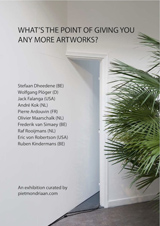
Pierre Ardouvin is participating in WHAT’S THE POINT OF GIVING YOU ANY MORE ARTWORKS?
Read More »