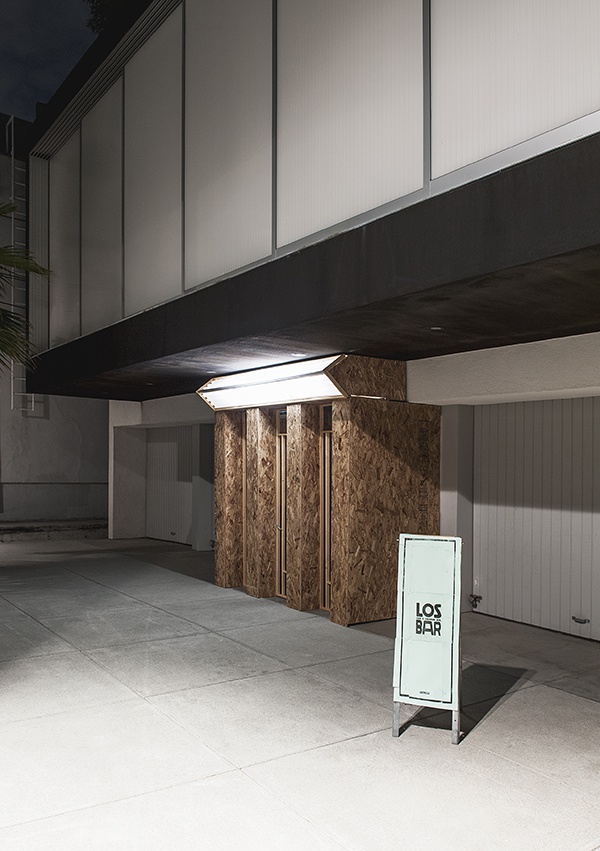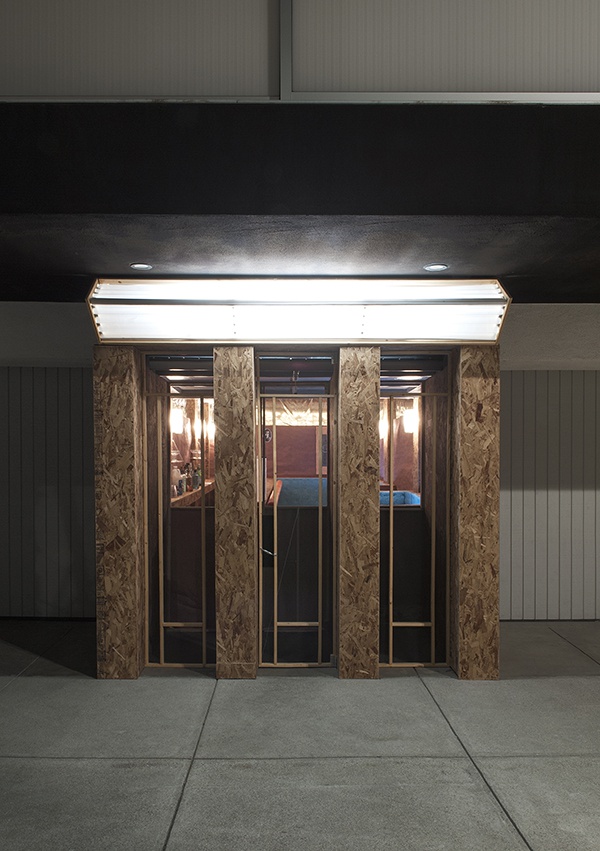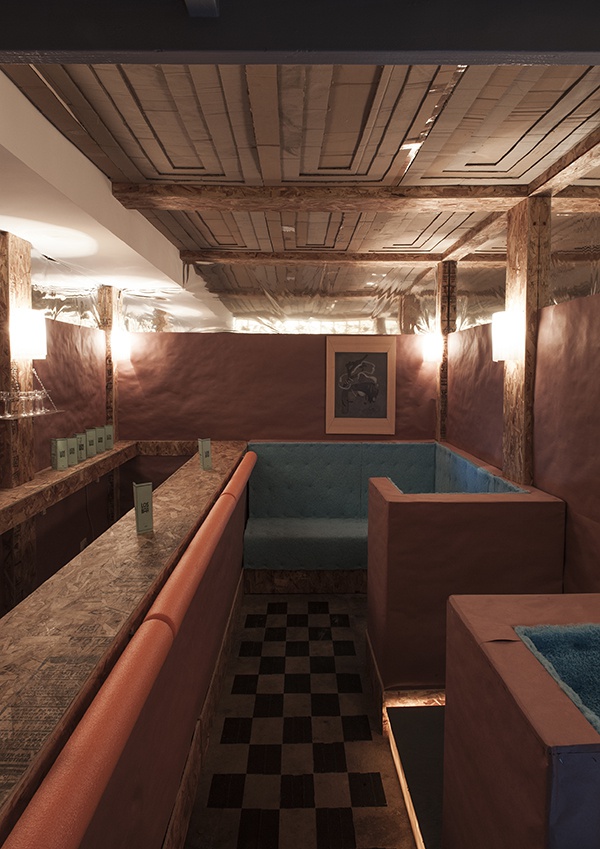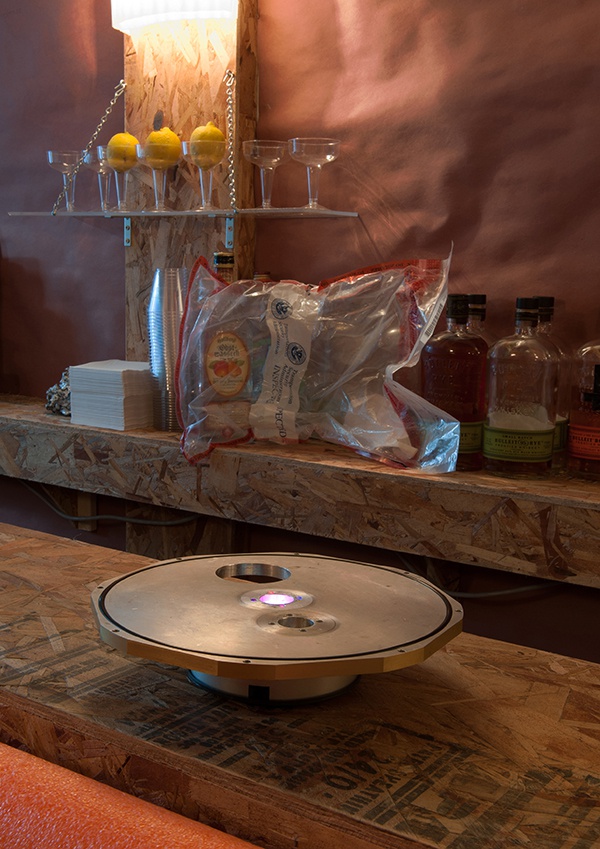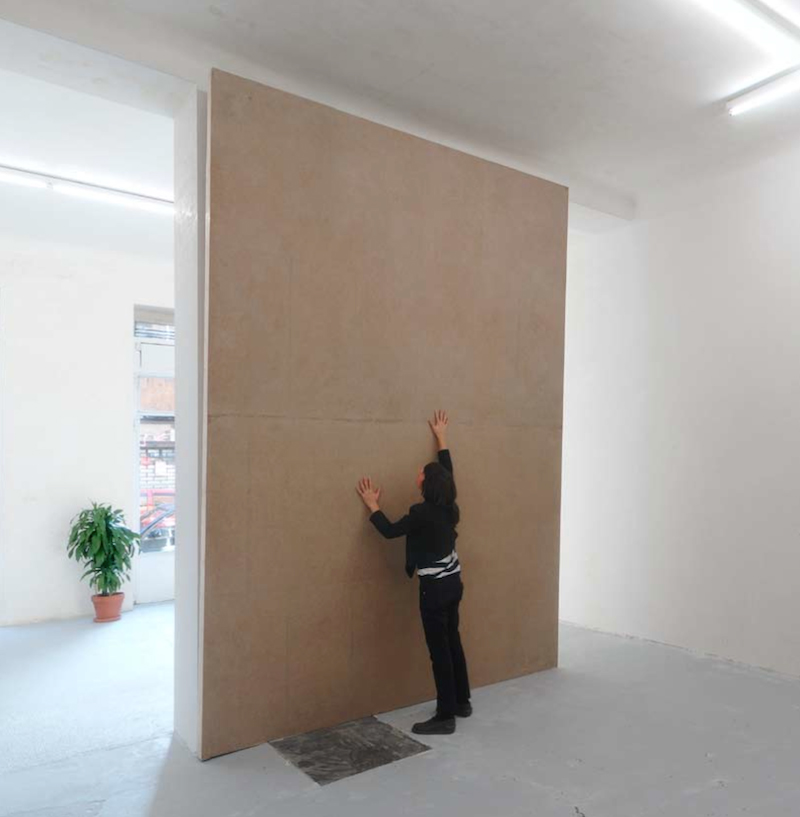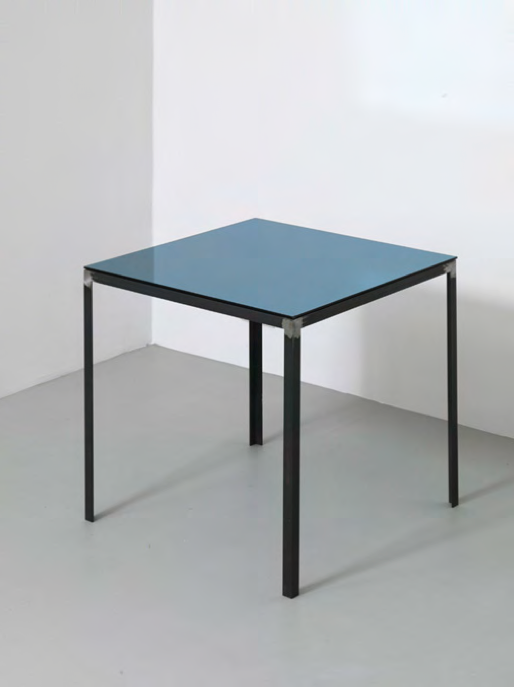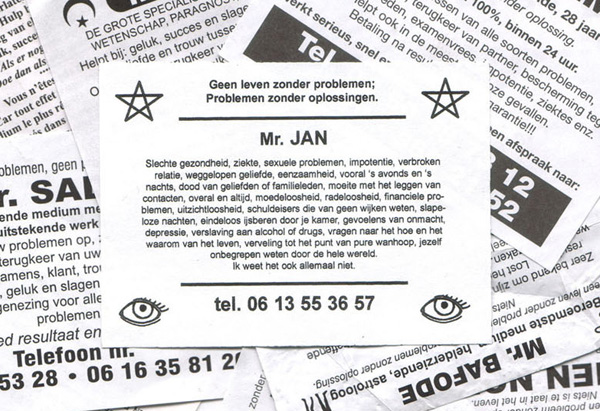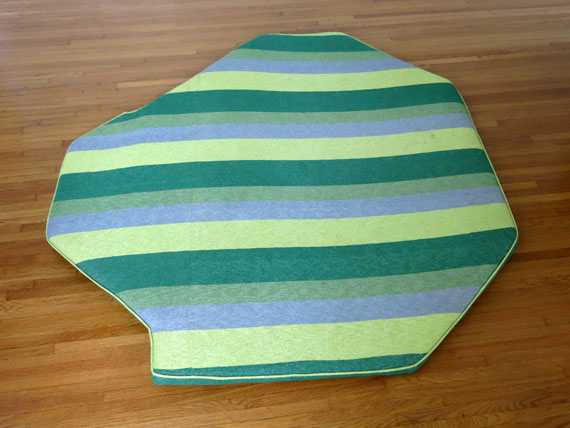

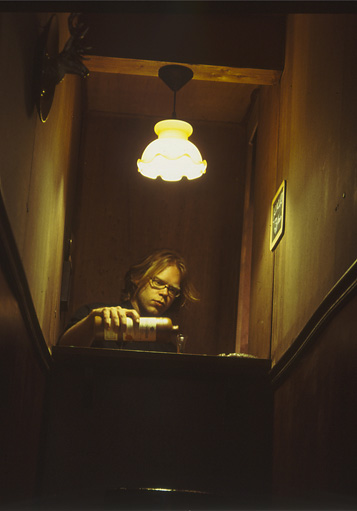
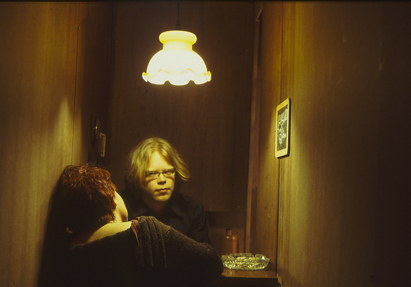
Mandla Reuter, ‘Coppice’ (2002)
An intervention that caused people to have to find a different way into the room.

Mandla Reuter, ‘Coppice’ (2002)
An intervention that caused people to have to find a different way into the room.
Last Friday @ Galerie Gallery was the opening of Willem Claassen’s show! Here are some very bad pictures of the evening, better pictures will follow on the website of Galerie Gallery!

Willem & Work.

Tomorrow, Friday the 18th, Galerie Gallery will be showing a brand spanking new work by Willem Claassen. Come and see it!

‘Nomiya’ by Laurent Grasso (2009) on the roof of Palais de Tokyo, Paris.
Nomiya Restaurant is a temporary building situated on the roof of the Palais de Tokyo, Paris, France near the Eiffel Tower. It was designed and built with the artistic concept of taking in the stunning views of the city of Paris by Laurent Grasso with the collaboration of the architect Pascal Grasso. The structure is comprised of a glass “cabin” and perforated metal screening.
Also there;
‘Between Metaphor and Object: Art of the 90s from the IMMA Collection‘,
which had a few nice works. Below:


Momoyo Torimitsu, ‘Miyata Jiro’ (1997)
The Japanese (but New York resident) artist Momoyo Torimitsu built a robot that resembles a businessman. It can crawl the streets of whichever city he places it. Video:
Now, the Japanese have put quite some more time and effort into building weird animatronics/robotics. Click on Read More to see a few more examples.

Ataskoa was a public announcement, made in the newspapers, over the radio, with flyers, posters, etc. to create a traffic jam in the hills.
On 18th September 2005, 160 cars (approximately 425 people) gathered at Intza, Navarre, on the sides of Mount Aralar. The jam started at 11am. and ended at 15pm.

Maider Lopez, ‘Ataskoa’ (2005)


Roman Ondák, ‘Czech Pavilion in the Giardini’, Venice Biennial (2009)
The garden landscape surrounding the Czech pavillion is continued inside.

Claire Fontaine, ‘Change’ (2005)
Twelve twenty-five cent coins, steel box-cutter blades, solder and rivets.

Jeppe Hein, ‘Falling screw’ (2008)
Whenever a visitor passes the sensor, a screw falls out of the hole in the wall.

Pierre Ardouvin, ‘Tout l’univers’ (2004)
Installation on a table, featuring a plant in a pot, a fish in a bowl and a bird in a cage.
Francis Alÿs, ‘Night watch’ (2004)
Alÿs released a fox, called Bandit, into the deserted gallery at night. Seen from the high viewpoint of the security cameras, the fox looks a little puzzled among all the paintings of the great and the good. Like the guards, the fox is out of context; an intruder, observed dispassionately.


Elmgreen & Dragset, ‘How are you today?’ (2002)
A ladder was installed inside the gallery, which the visitor was encouraged to climb.
Once up, the visitor could have a peek into the private life of the gallerist.

‘Tunnel’ (2004) by Marjolijn Dijkman and Wouter Osterholt.
Installed at Sign, Groningen (NL).
The intervention consisted of a tunnel built through the gallery space that transformed the non-public space of the gallery into a public space. Removing one of the windows at the front and a garage door at the back allowed twenty-four hour access through the tunnel.
BBC’s Art Safari, ‘Gregor Schneider‘ (2004)
Another Art Safari episode, this time Ben Lewis visits Gregor Schneider in Haus Ur.

Bas Schevers, ‘Kinderfiets (Children’s bicycle)’ (2001)
Bas Schevers stole a child’s bicycle from a front yard and left the owners a note, saying that he stole it for an art exhibition and that they could have it back if they came by on the night of the opening.
At the opening Bas was sitting by a table with a sandwich toaster in front of him. The owners of the bicycle could choose whether they wanted the bicycle back and take the toaster too, or if they wanted the bicycle back and have a conversation with the artist about his motivations for stealing the bike.

Stefaan D’heedene, ‘Billy’ (2006)
Stefaan Dheedene bought a piece of furniture from the Billy series at Ikea. But the day before the exhibition opened, Dheedene took Billy back to Ikea. He received back the money he invested.
In the time before the opening the artist had hired a carpenter who reconstructed the mass-produced Billy as a unique work of art, in a slightly more expensive and nicer type of wood.
Billy’s next buyer must’ve been a happy consumer…

www.international-klein-blue.com
International Klein Blue is outside the gamut of computer displays, and can therefore not be accurately portrayed on webpages.
Gianni Motti
Gianni Motti, ‘Finishing’ (2000)
The day of the opening coincided with the marathon of Bienne. Gianni Motti moved the finishing line, adding an extra three meters to the distance of the race.