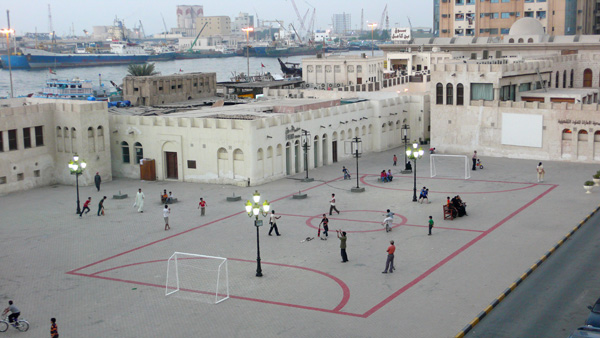
Maider López, ‘Football Field 1’, Sharjah Art Museum, United Arab Emirates (2007)
As part of the Sharjah Biennial, artist Maider López painted the lines of a soccer field red in a public square of Sharjah, adding goals on either end. Because pre-existing features such as benches and streetlamps were not altered, the square became a strange new site for football matches where spectators relaxed on benches inside the pitch at all hours.
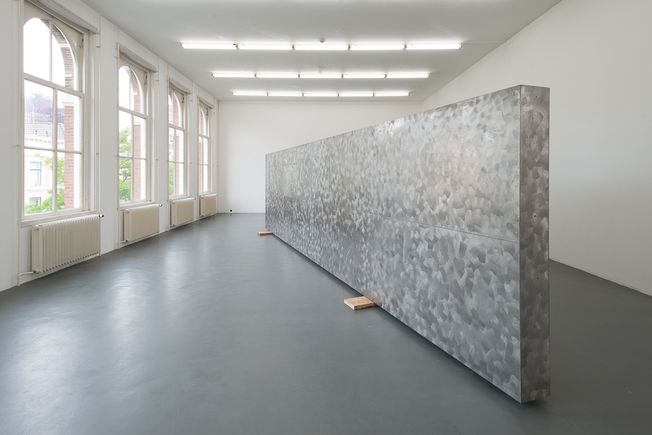
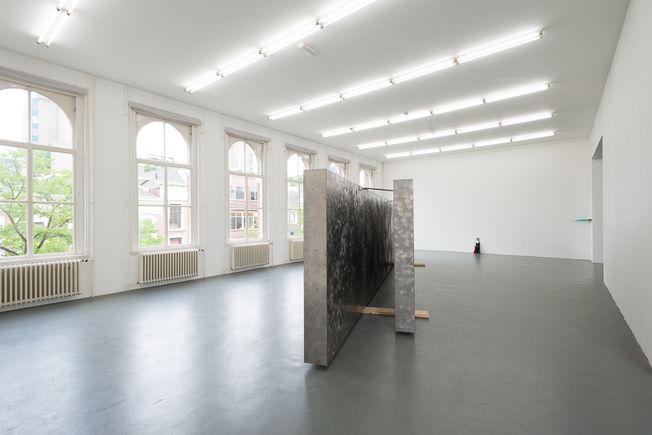
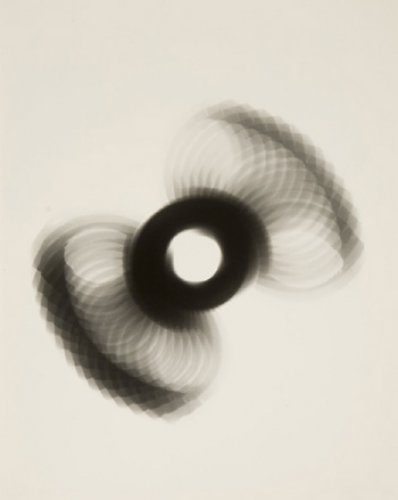
For the exhibition ‘The Part In The Story’ Bik Van der Pol decided to bring the sculpture ‘Two Rectangles Vertical Gyrating’ (1971) by George Rickey, and install it laying down on the floor of the exhibition space. This kinetic sculpture, normally installed on Rotterdam’s busy Binnenwegplein, has somewhat of a contested history. After recent renovations of the square causing an elevation of the ground, the blades of the sculpture rotate at a mere 2.11 meters above street level. The sculpture was hence considered a safety hazard because of the danger of it hitting the heads of passers-by. In prevention of any accidents, the sculpture was fenced off in 2012 and temporarily removed later that same year.
A video showing Rickey’s sculpture in action on its old location.
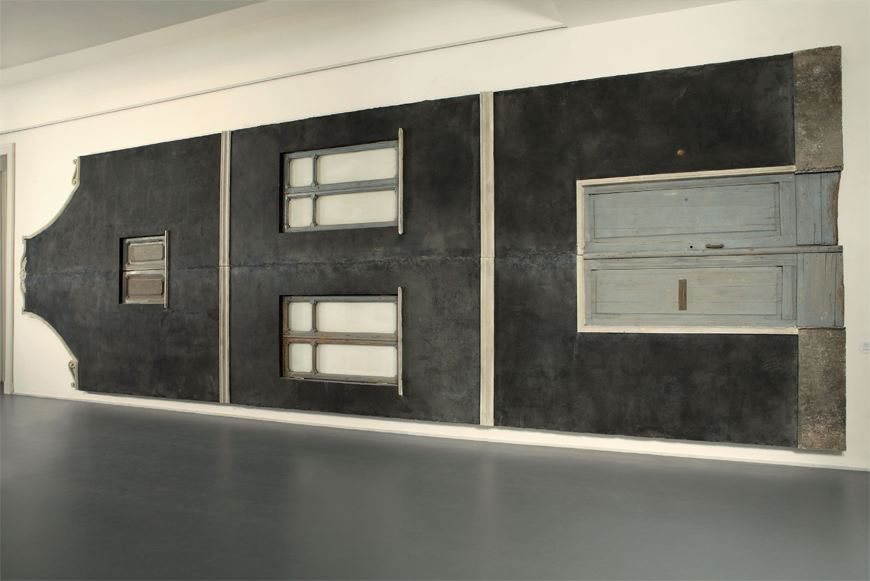
Piero Golia, ‘It takes a nation of millions to hold us back’ (2003)
The entire façade of a building removed from its original position in Amsterdam and installed in a gallery space in Paris. The work’s title is a reference to the mythical album by the rap band Public Enemy.
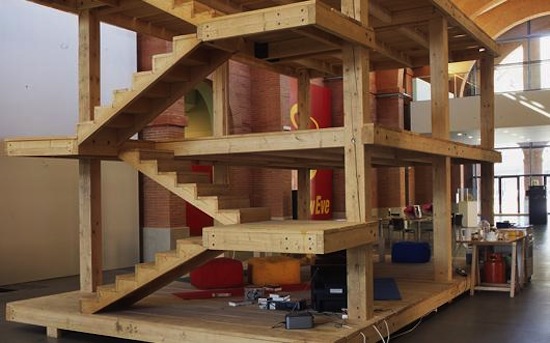
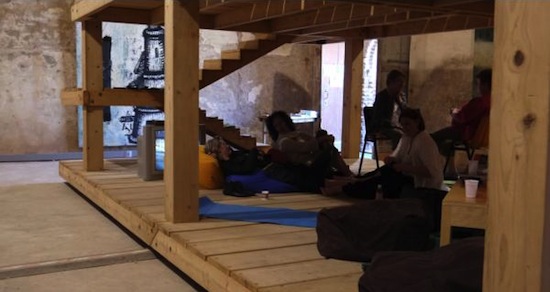
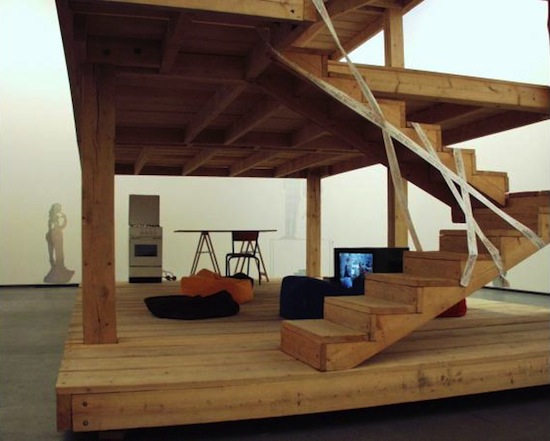
In Rirkrit Tiravanija’s replica of the Dom-ino concept (1915) by le Corbusier, the spectator becomes the inventer and the actor of his own environment, in the interaction with his fellow visitor. The lower platform is equipped with a CD and cassette player, a TV, a kitchen corner with table and butagaz-cooker, a low table with poufs. The visitors are invited to use the house as they wish, and to share what they bring or find with the others.
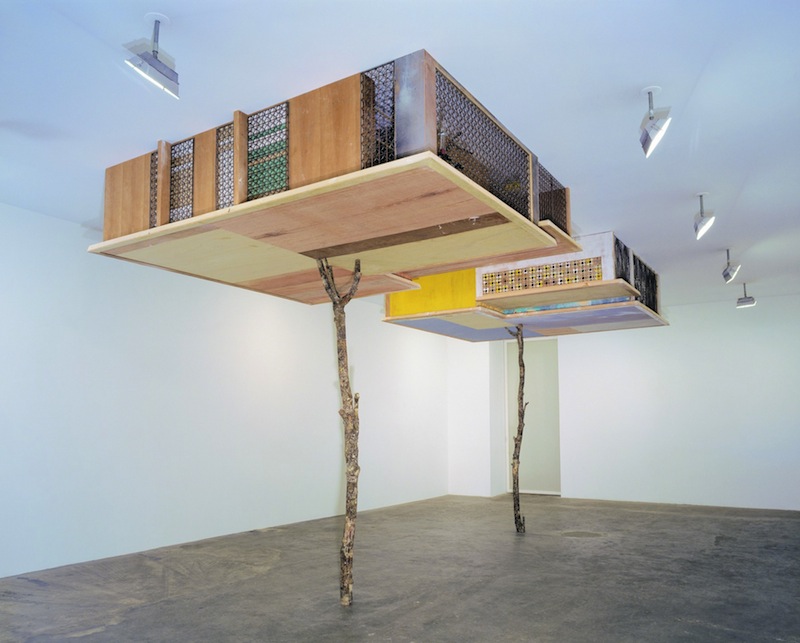
Simon Starling, ‘Inverted Retrograde Theme, USA (House for a Song bird)’ (2002)
This installation references a housing project in Puerto Rico which was designed by Austrian architect Simon Schmiderer (1911-2001) in the 1960s. Schmiderer developed a series of houses made of building blocks without doors or windows to further integrate the outside and inside spaces, but the rise of crime in the 1970s forced locals to add elaborate barriers onto Schmiderer’s designs. In Inverted Retrograde Theme, USA, Simon Starling recreates two of the existing homes on a smaller scale and inverts them like birdcages; these models sit atop tree trunks that extend from the gallery’s floor.
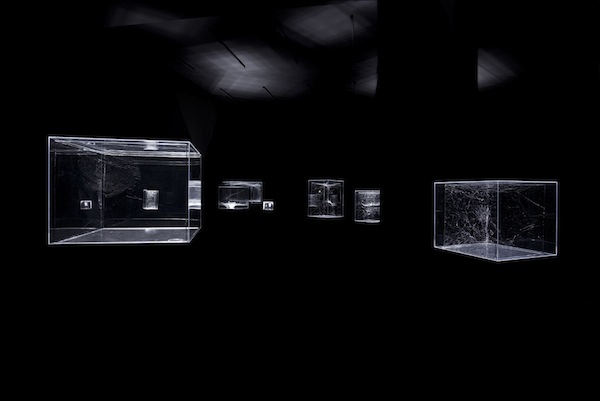
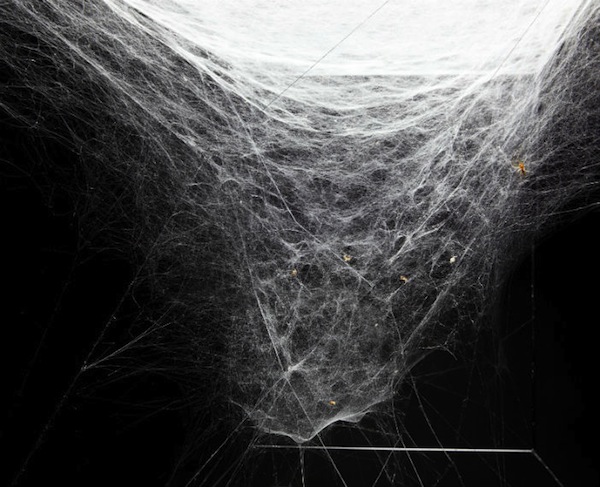
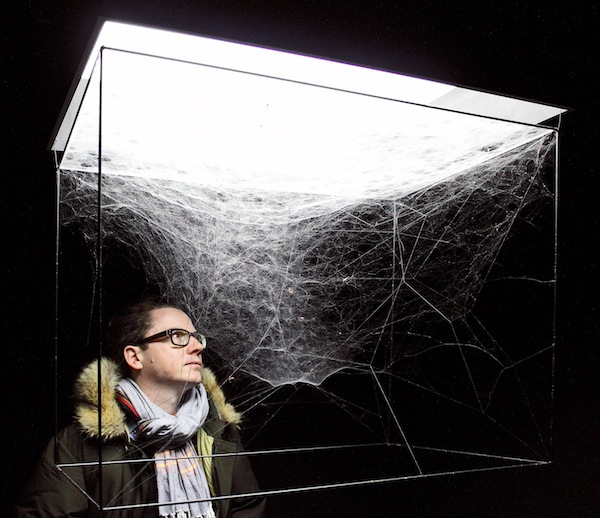
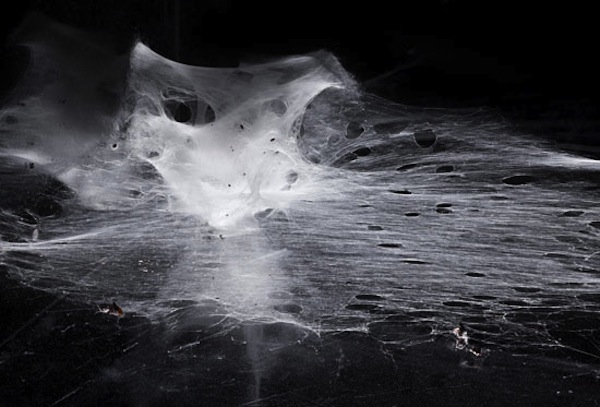
A display of hybrid spiderwebs made by various species of spiders. The result: webs on top and inside of other webs, webs woven by rare species of social spiders with webs of solitary, asocial spiders.