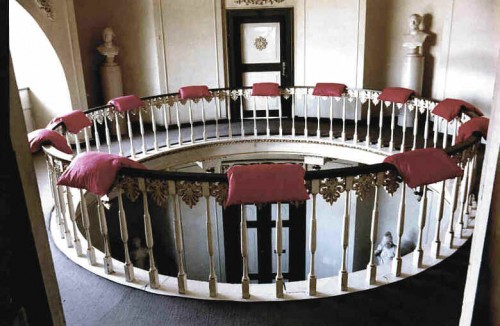
Reiner Ruthenbeck, ’14 Rote Kissen’ (1983) at Kunstverein Braunschweig.
By mh
|
Posted in Composition
|
Also tagged 14, action, DIY, found, fourteen, fuckem, handrail, installation, intervention, kunstverein braunschweig, landing, Mark, pillows, railing, red, reiner ruthenbeck, romance
|
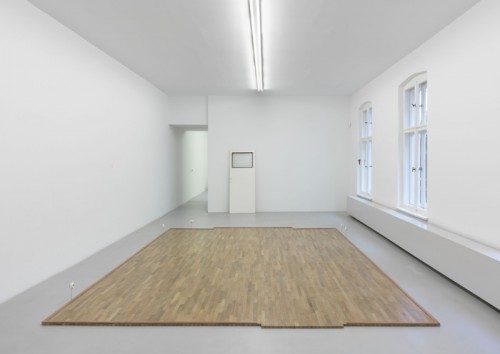
Roman Ondák, ‘Shared Floor’ (1996)
A stretch of parquet flooring and electrical sockets that Ondák excised from an apartment.
By mh
|
Posted in Composition
|
Also tagged apartment, architecture, DIY, electrical, flooring, found, fuckem, installation, lift, move, parquet, roman ondak, sculpture, shared floor, shift, sockets, space, unknown, wall
|
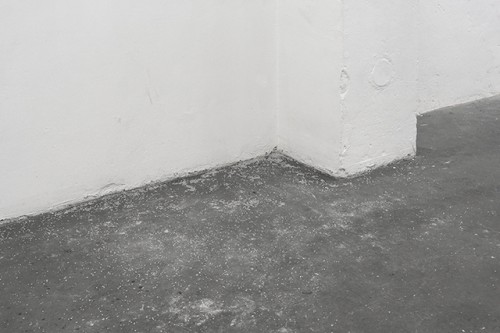
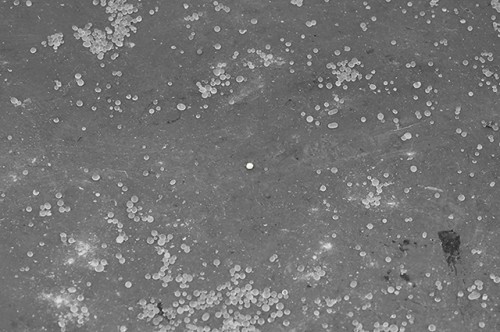
Paul Geelen, untitled (2013)
Silica gel balls and one slug egg.
By mh
|
Posted in Composition
|
Also tagged balls, corner, found, gallery, infinity, installation, netherlands, one, paul geelen, potential, search, silica gel, slug egg, unknown, wall
|
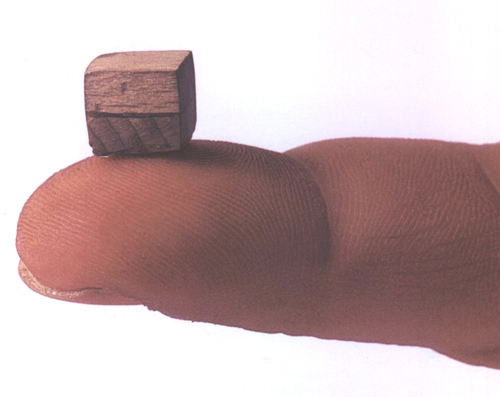
Cildo Meireles, ‘Southern Cross’ (1969-1970)
Oak and pine cube. Meireles has explained:
Southern Cross was initially conceived as a way of drawing attention, through the issue of scale, to a very important problem, the oversimplification imposed by the proselytising missionaries – essentially the Jesuits – on the cosmogony of the Tupí Indians.
The white culture reduced an indigenous divinity to the god of thunder when in reality their system of belief was a much more complex, poetic and concrete matter, emerging through their mediation of their sacred trees, oak and pine. Through the rubbing together of these two timbers the divinity would manifest its presence.
By mh
|
Posted in Composition
|
Also tagged cildo meireles, clash, combination, cube, culture, divinity, DIY, found, indians, indigenous, matter, oak, pine, poetics, presence, romance, sacred, sculpture, size, southern cross, the wild, tiny, trees, unknown, wood
|
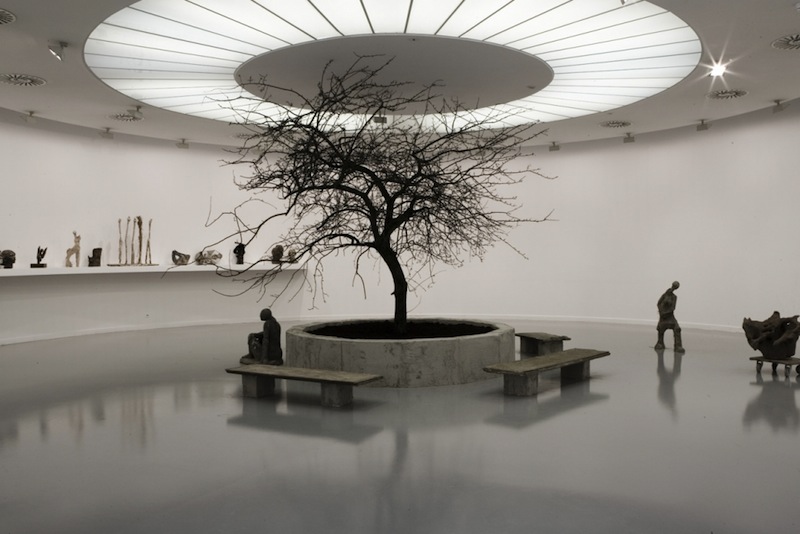
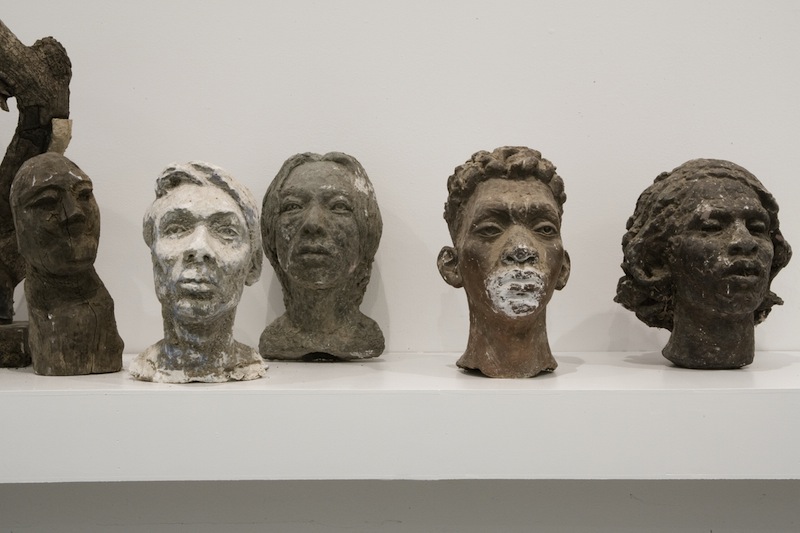
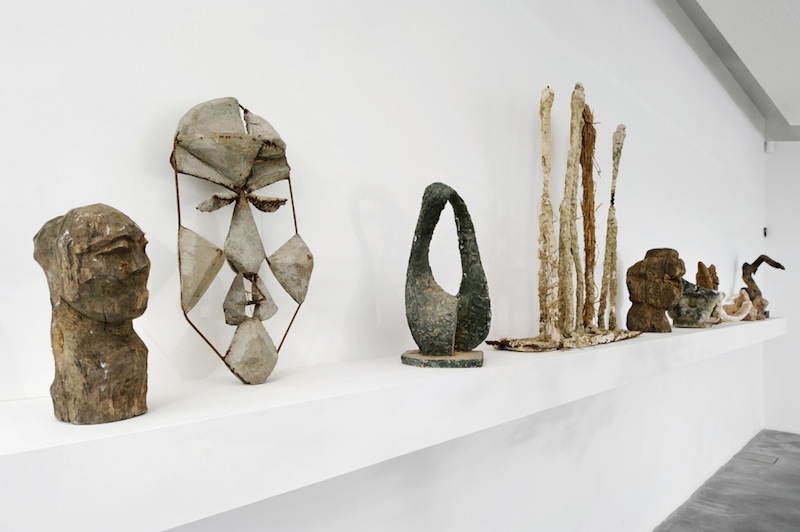
Goshka Macuga, ‘When was Modernism?’ (2008)
Mixed media installation including tree, concrete, soil, breeze blocks and concrete benches, and works in various materials by Ramkinkar Baij and students from the sculpture department at Kala Bhavan, the Faculty of fine Art Visva Bharati University, Santinketan, West Bengal.
By dd
|
Posted in Composition
|
Also tagged action, anonymous, currents, discarded, found, goshka macuga, India, modernism, pedantic, romance, sculpture, students, the wild, trends, university, unwanted, west bengal, what's in a name, when
|
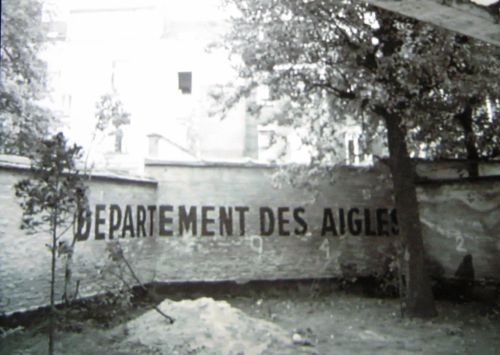
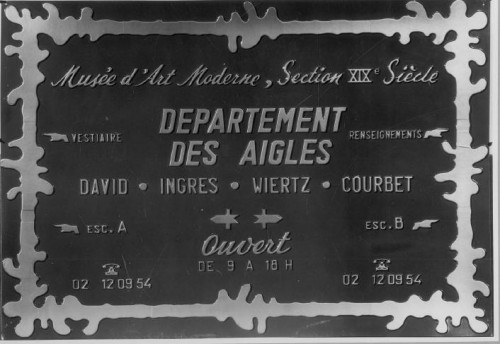

Marcel Broodthaers, ‘Musée de l’art Moderne, Départment des Aigles’ (1968)
In 1968, the Belgian artist Marcel Broodthaers created an installation in his house that he entitled the Musée de l’Art Moderne, Départment des Aigles, or Museum of Modern Art, Department of Eagles. This was a fictive entity in that the museum had neither a permanent building nor a collection; nonetheless, it was elaborated by Broodthaers in about a dozen further installations. Evidence of the museum’s existence (apart from its title) ultimately encompassed specially created objects, films, and art reproductions as well as ephemera such as wall labels and signage.
By mh
|
Posted in Composition
|
Also tagged aigles, belgium, brussels, department, eagles, emblem, found, house, installation, marcel broodthaers, modern art, museum, paraphernalia, symbolism, unknown
|
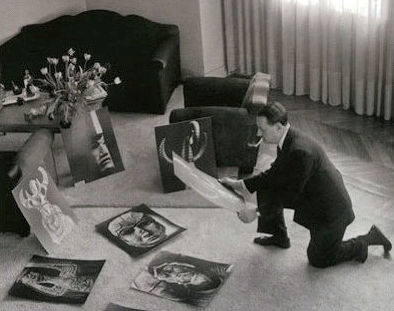
André Malraux, ‘le Musée imaginaire’ (The imaginary museum)
Le Musée imaginaire is an archive that Malraux began in 1947. His “museum without walls,” as he described it, was a montage of photographs of art from all around the globe and throughout history, stretching from Roman sculptures to Impressionist painting.
By dd
|
Posted in Composition
|
Also tagged andre malraux, archive, DIY, found, imaginary, light, meaning, mechanical sculpture, megalomaniac, museum, no walls, obsession, reproduction, writer
|
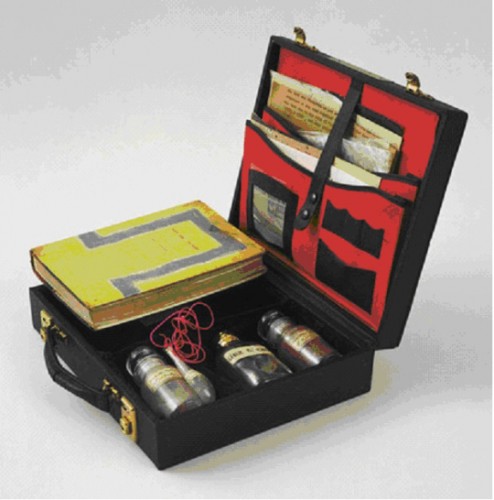
John Latham, ‘Art and Culture’ (1966-69)
In 1966, Latham borrowed Clement Greenberg’s book Art and Culture from the St Martin’s School of Art library and organised a party at which guests chewed pages from it; the remains were then fermented into mash, distilled and returned in a test-tube to the library.
By mh
|
Posted in Composition
|
Also tagged action, art and culture, art history, book, chew, clement greenberg, cult, distill, DIY, found, fuckem, fun, installation, john latham, joke, light, liquid, pages, performance, public art, pulp, romance, spit, the wild, theory, trash, unknown
|
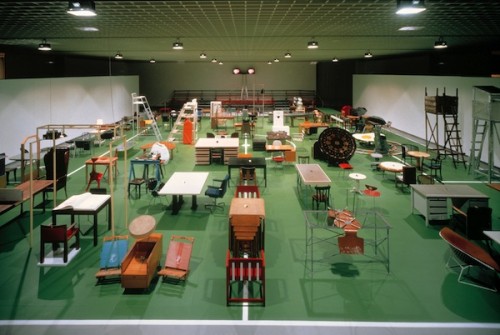
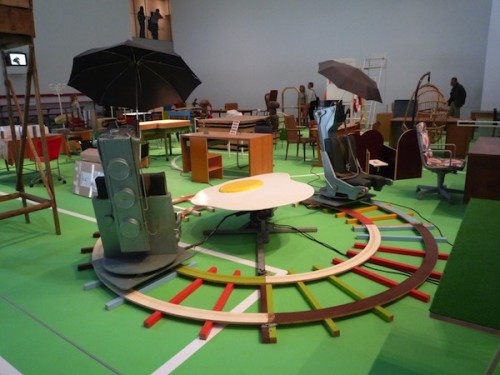
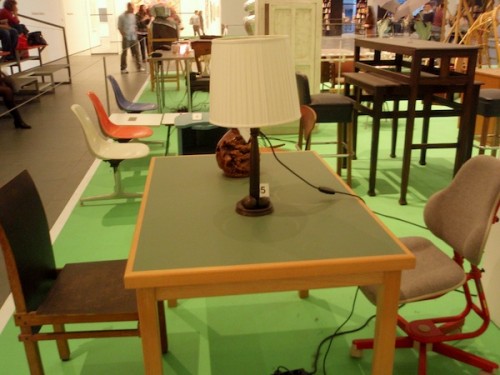
Martin Kippenberger, ‘The Happy End of Franz Kafka’s ‘Amerika’’ (1994)
By mh
|
Posted in Composition
|
Also tagged amerika, chairs, desks, employment, fictional, field, found, fuckem, fun, furniture, grid, installation, job interviews, kafka, large, Martin Kippenberger, performance, playing, puzzle, sculpture, text, unknown, utopia
|
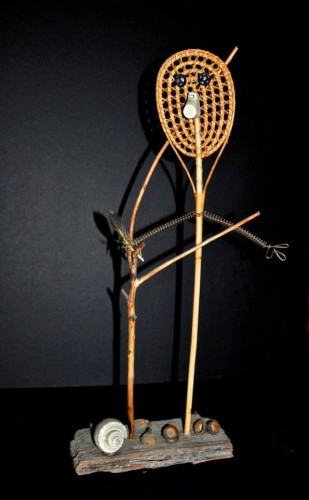
Gertrude Quastler, ‘Assemblage’ (ca. 1960)
Driftwood, sea shells, wire and other found objects.
By mh
|
Posted in Composition
|
Also tagged american, assemblage, austrian, collage, DIY, found, found materials, fuckem, fun, gertrude quastler, installation, light, realism, sculptor, sculpture, the wild, trash, unknown, vienna
|