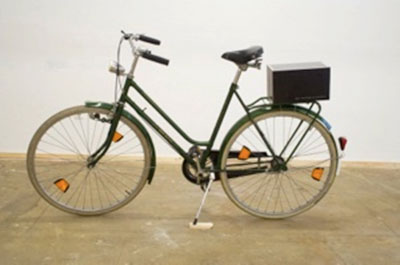
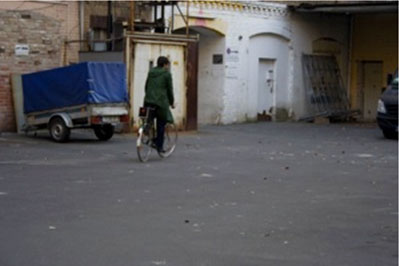
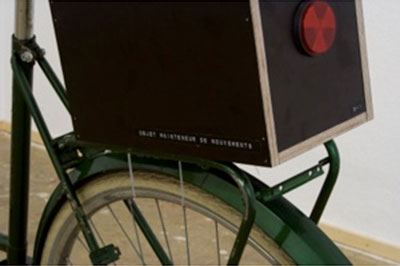
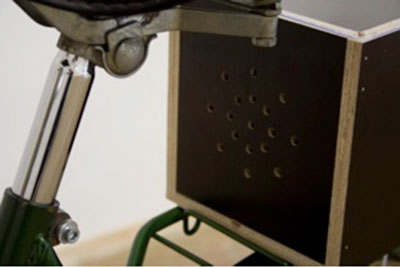
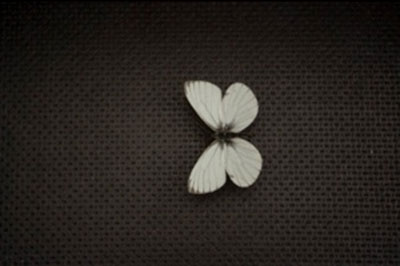
Nuno Vicente,’Objet Mainteneur de Mouvements’ (‘Object for keeping movement’) (2011)
A bicycle attached to a box containing a dead butterfly. Whilst pedaling air passes through the box, moving the butterfly´s wings as if it were flying.
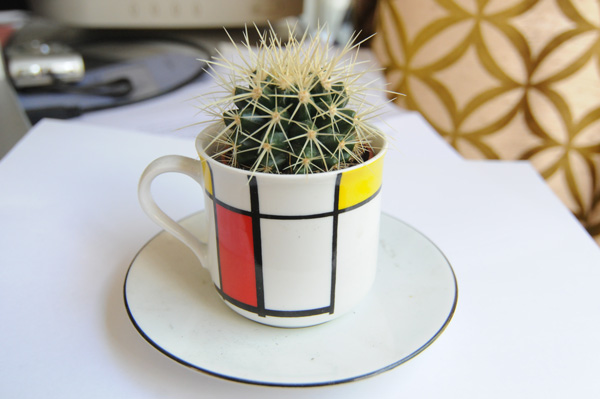

Nuno Vicente,’Objet Mainteneur de Mouvements’ (‘Object for keeping movement’) (2011)
A bicycle attached to a box containing a dead butterfly. Whilst pedaling air passes through the box, moving the butterfly´s wings as if it were flying.
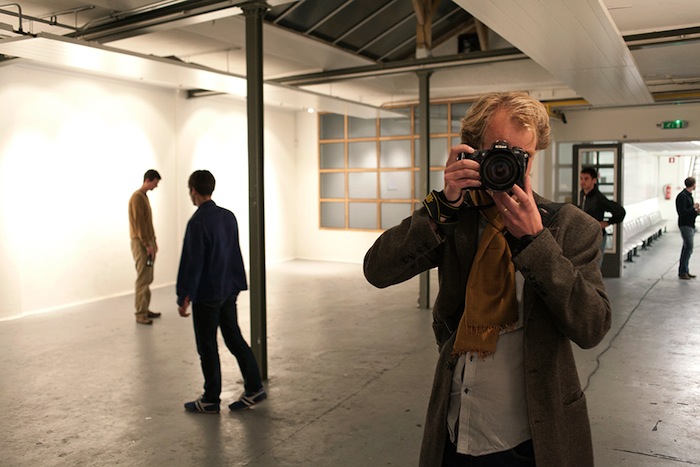
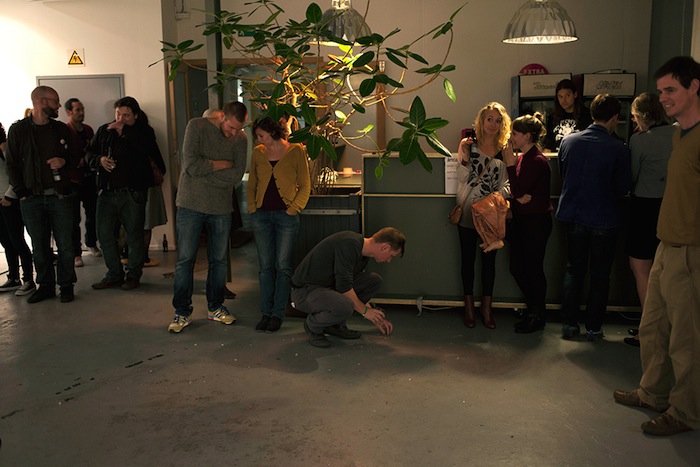
Bas Schevers, ‘Impulse’ (2012)
During this one minute performance, eleven people (attendees of the opening) suddenly interrupted the existing situation with brief actions that were exaggerations of normal gallery behavior. Some examples of these simultaneously performed actions are: someone closely examining an empty corner of the space, a man was thinking of something really sad until it made him cry, two people talking to eachother while rythmically clacking their heels, someone singing in the toilet, a photographer taking pictures of the photographer and eventually two wine glasses falling on the floor in two different corners of the space at the exact same time.
Commissioned by pietmondriaan.com for our exhibition I Want to Believe. Photos by Jan Adriaans.
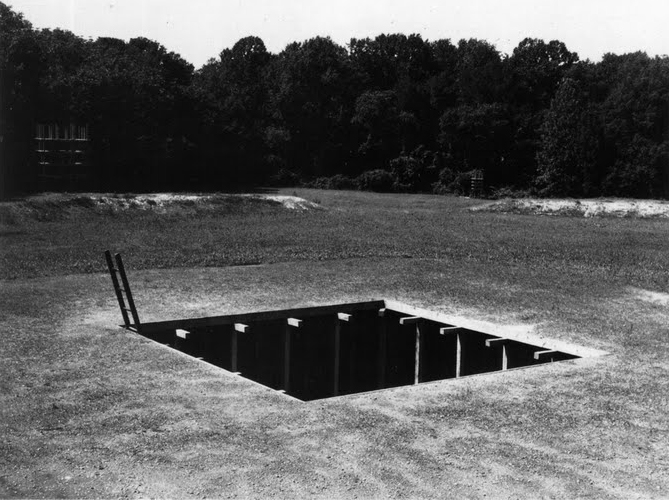
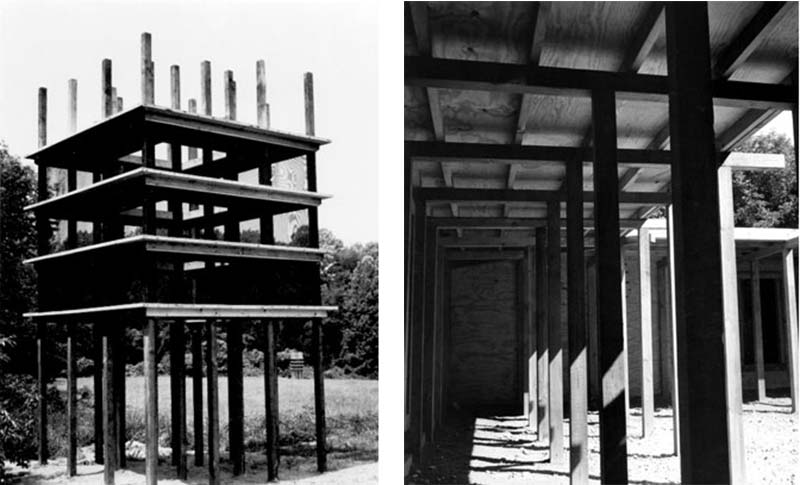
Mary Miss, several impressions of the exhibition ‘Perimeters / Pavillions / Decoys’ (1978)
Short PDF on the work here.
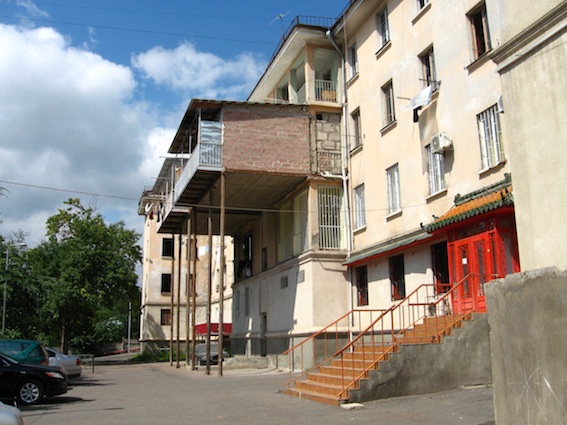
Photograph by Levan Asabashvili.
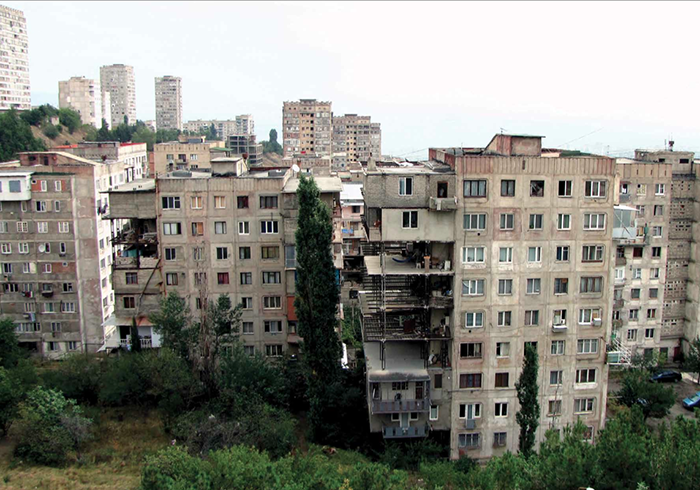
Photograph by Krzysztof Weglel.
Some examples of informal structures called “kamikaze loggias”, the vernacular extensions of modernist buildings characteristic of Tbilisi. These extensions have been created since the 1990s as an organic response to the new, “lawless” times after the fall of the Soviet Union. They increase the living space and are usually used as terraces, extra rooms, open refrigerators, etc.
It is said that a Russian journalist named them “kamikaze”, drawing a parallel between the romantic and suicidal character of such an endeavour and the typical ending of most Georgian family names “-adze”. This architecture also refers back to the local palimpsestic building technique, which since the Middle Ages has allowed new houses to be built on top of existing ones on the steep slopes of the Caucasus Mountains thus not monumentalising the past but expanding on it for the future.
Read more about the Georgian Pavillion at the 2013 Venice Architecture Biennale here.

Ottoman miniature from the Surname-i Vehbi (‘Book of Festival’, an album with illustrations depicting celebrations), showing the Column with the three serpent heads, in a celebration at the Hippodrome in 1582.
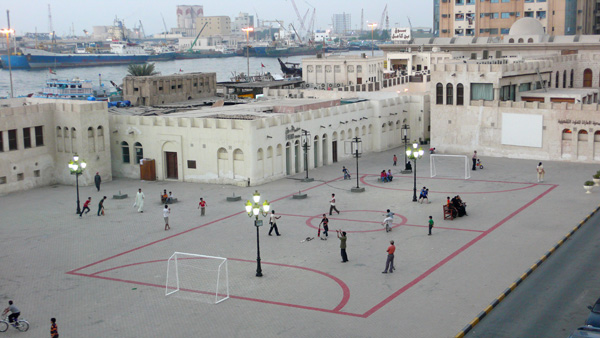
Maider López, ‘Football Field 1’, Sharjah Art Museum, United Arab Emirates (2007)
As part of the Sharjah Biennial, artist Maider López painted the lines of a soccer field red in a public square of Sharjah, adding goals on either end. Because pre-existing features such as benches and streetlamps were not altered, the square became a strange new site for football matches where spectators relaxed on benches inside the pitch at all hours.
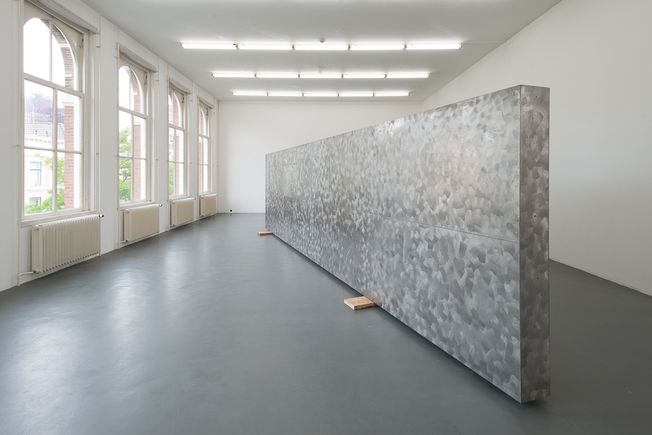
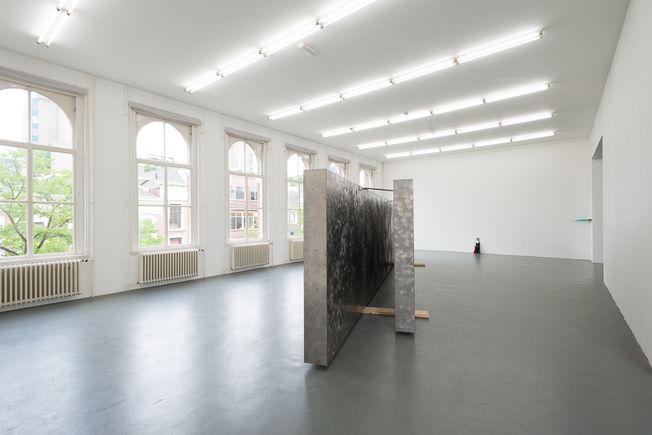
Bik Van der Pol, ‘Up close’ (2014)
For the exhibition ‘The Part In The Story’ Bik Van der Pol decided to bring the sculpture ‘Two Rectangles Vertical Gyrating’ (1971) by George Rickey, and install it laying down on the floor of the exhibition space. This kinetic sculpture, normally installed on Rotterdam’s busy Binnenwegplein, has somewhat of a contested history. After recent renovations of the square causing an elevation of the ground, the blades of the sculpture rotate at a mere 2.11 meters above street level. The sculpture was hence considered a safety hazard because of the danger of it hitting the heads of passers-by. In prevention of any accidents, the sculpture was fenced off in 2012 and temporarily removed later that same year.
A video showing Rickey’s sculpture in action on its old location.