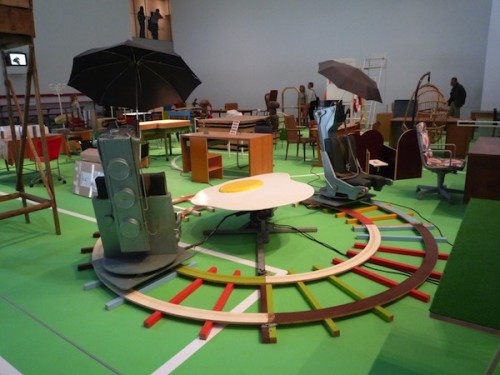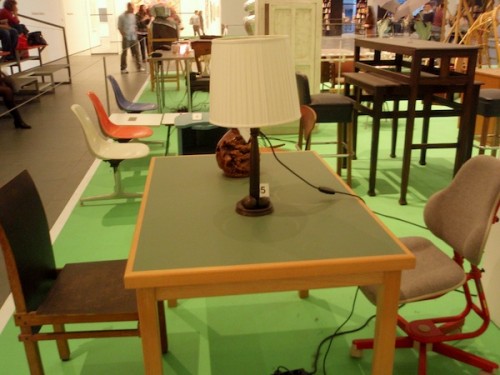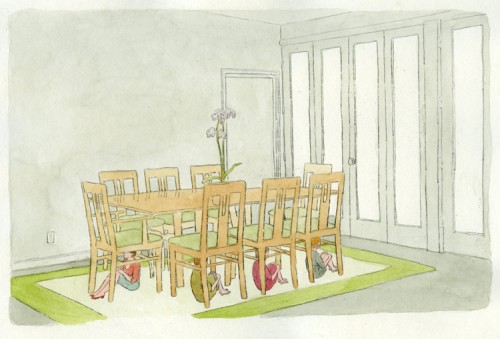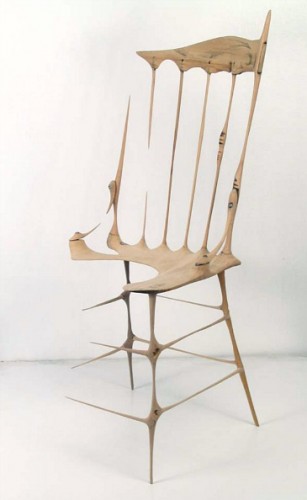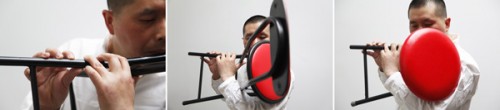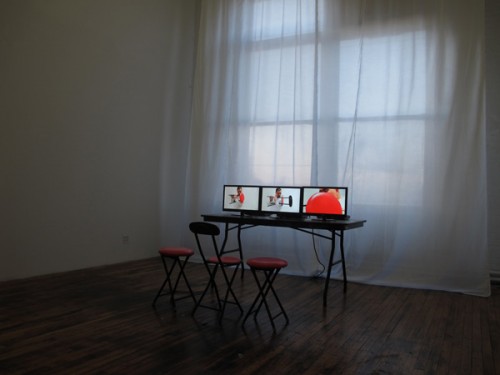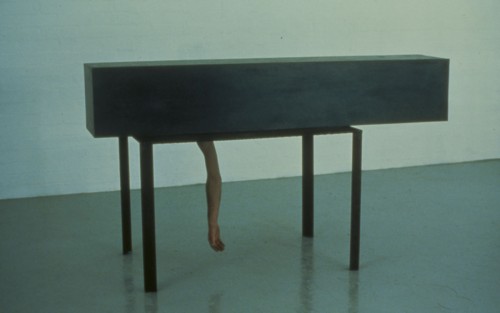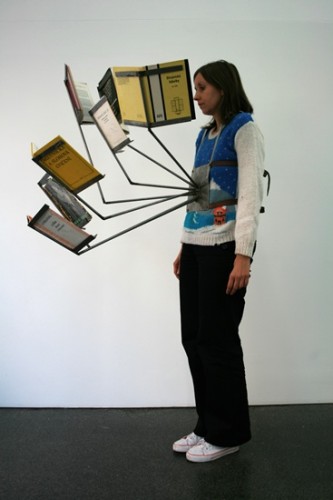
Eva Kotatkova, Untitled (2009)
From the exhibition Controlled Memory Loss at Hunt Kastner, Prague.

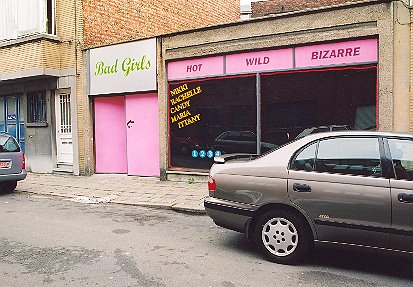
Bas Schevers, ‘Bad girls’ (2003)
Schevers gave the façade of Lokaal01 Antwerp a make-over, making it look like a strip club, attracting different visitors than usual.
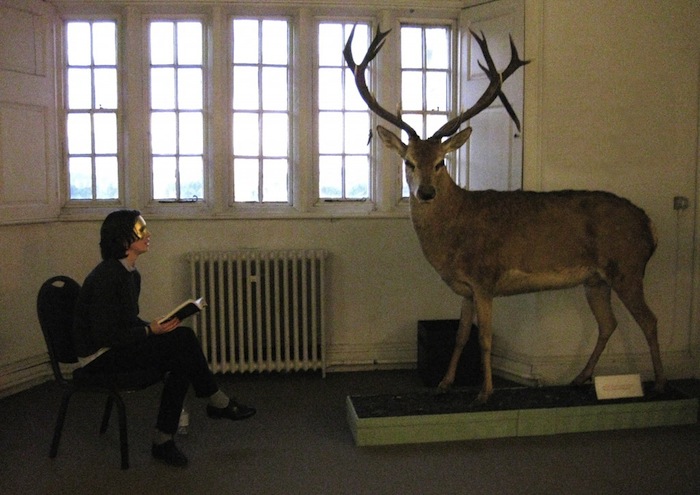
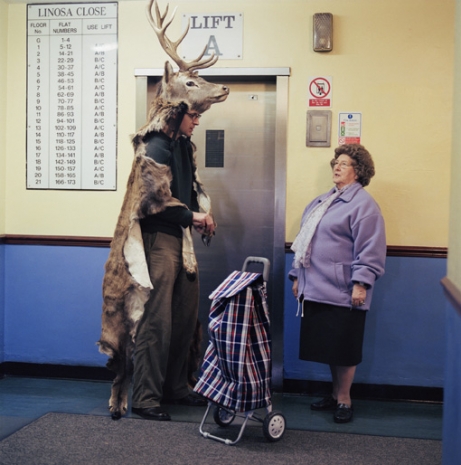
Siân Robinson Davies, ‘Explaining Sense and Sensibility to an Old Deer’ (2010)
“Wollaton Hall is a 16th century house in Nottingham, with grounds inhabited by freely roaming deer and rooms housing a vast collection of taxidermy animals, and is said to have influenced Jane Austin’s novel Sense and Sensibility. In Explaining Sense and Sensibility to an Old Deer I read sections of the book to a dead stag, while explaining human traits such as irony, sadness, empathy, sexist humour and equal opportunities by trying to equate them to social situations that the deer might once have found itself in.”
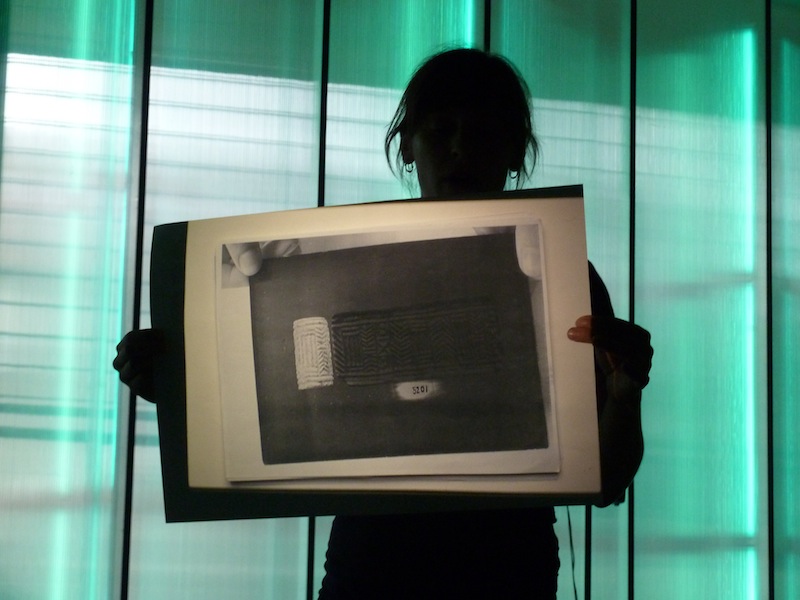
‘The Image After’ by Eva Olthof.
The Image After is a performative presentation, which consists of three parts. It deals with questions concerning archaeological objects, their (early) photographical representations and cultural heritage in times of chaos. The first part discusses an assembly of images that depicts archaeological objects belonging to a museum in Beirut. These objects were stolen just after the civil war ended in 1991 and still remain missing.