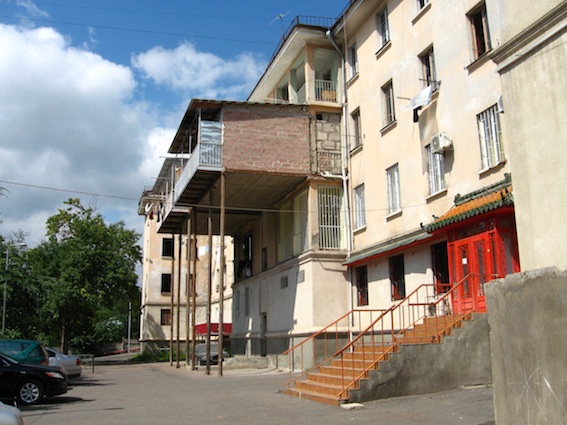
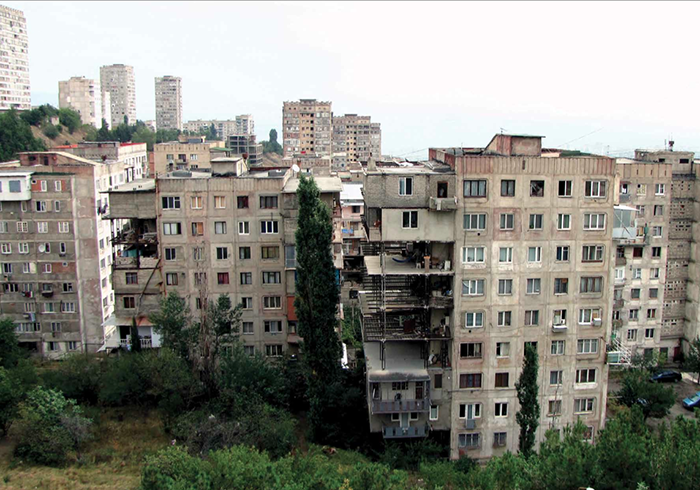
Some examples of informal structures called “kamikaze loggias”, the vernacular extensions of modernist buildings characteristic of Tbilisi. These extensions have been created since the 1990s as an organic response to the new, “lawless” times after the fall of the Soviet Union. They increase the living space and are usually used as terraces, extra rooms, open refrigerators, etc.
It is said that a Russian journalist named them “kamikaze”, drawing a parallel between the romantic and suicidal character of such an endeavour and the typical ending of most Georgian family names “-adze”. This architecture also refers back to the local palimpsestic building technique, which since the Middle Ages has allowed new houses to be built on top of existing ones on the steep slopes of the Caucasus Mountains thus not monumentalising the past but expanding on it for the future.
For the exhibition ‘The Part In The Story’ Bik Van der Pol decided to bring the sculpture ‘Two Rectangles Vertical Gyrating’ (1971) by George Rickey, and install it laying down on the floor of the exhibition space. This kinetic sculpture, normally installed on Rotterdam’s busy Binnenwegplein, has somewhat of a contested history. After recent renovations of the square causing an elevation of the ground, the blades of the sculpture rotate at a mere 2.11 meters above street level. The sculpture was hence considered a safety hazard because of the danger of it hitting the heads of passers-by. In prevention of any accidents, the sculpture was fenced off in 2012 and temporarily removed later that same year.
A video showing Rickey’s sculpture in action on its old location.